Stories · Orange Wine · Japanese Food
What Is Orange Wine? A Guide to Taste, Pairing, and Choosing Your First Bottle
Orange wine contains no oranges. Learn how skin-contact white wine is made, why it can taste tannic, how it pairs with Japanese food, and how to choose a first bottle.
Orange wine, made without oranges
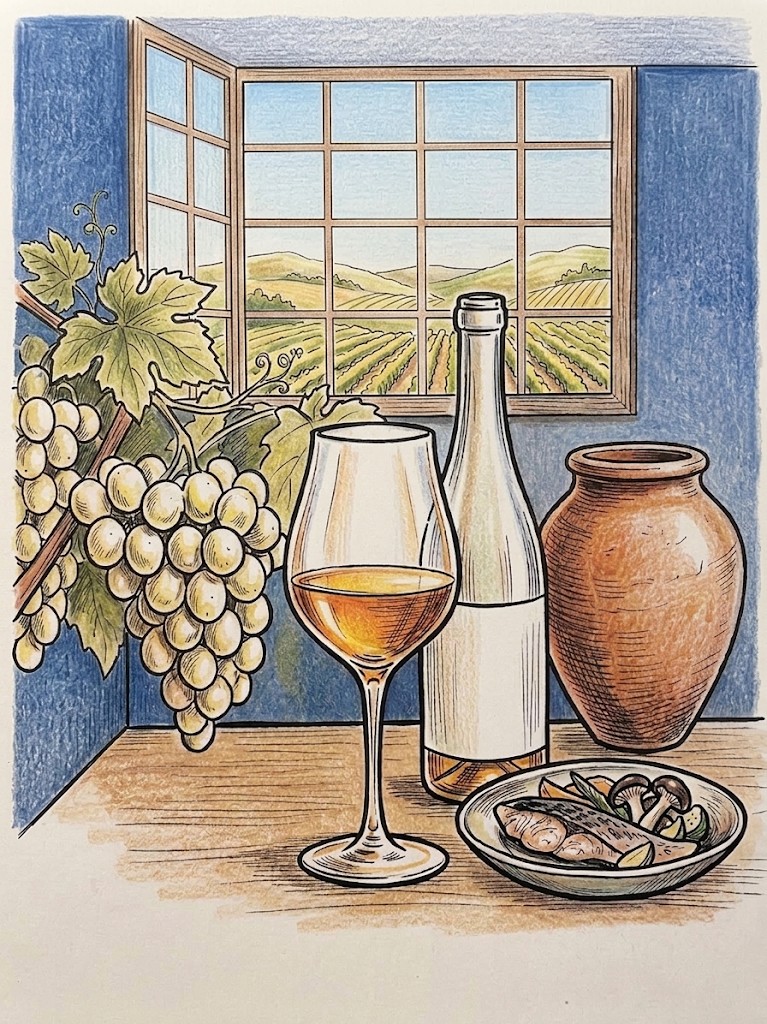
Orange wine contains no oranges. It is made by fermenting white grapes with their skins, much as red wine is made. That gives the wine colours ranging from gold to amber.
Conventional white wine is usually fermented as juice alone. In orange wine, the juice remains with the skins, allowing colour, phenolic compounds, aroma, and texture to enter the wine.
Not necessarily sweet, though it may smell sweet
The word “orange” describes colour and method, not sweetness. Many orange wines are dry.
Aromas of ripe apricot, peach, or dried fruit can make a dry wine seem sweet. If you prefer dry wine, look for “dry” in the description and begin with a lighter style.
The tannin that broadens the food pairings
The surprise for many first-time drinkers is a gentle tannin or dry grip in a wine that looks like white wine. It often comes from the skins. Orange peel, tea, and nut-like notes can be part of the same process.
That texture can sit comfortably with umami-rich food such as dashi, soy sauce, sesame, and mushrooms. Try a lighter style with grilled fish, or a fuller one with teriyaki chicken and mushroom rice.
Three ways to choose a first bottle well
First, look for freshness. For a first bottle, a pale-gold wine described as light, fresh, or fruit-forward is often an easier start. Deeper amber can signal a more powerful style with longer skin contact.
Second, do not confuse terms. Orange wine describes a method and style. It does not mean the same thing as natural wine. Read more in [What Is Natural Wine?](/en/stories/natural-wine/).
Third, avoid overchilling. Begin around 10–12°C and let aroma and texture emerge as the glass warms. For an opened bottle, see [How to Store Wine](/en/stories/wine-storage-after-opening/).
Qvevri does not define the style on its own
In Georgia, white grapes are traditionally fermented in qvevri, clay vessels, with skins, seeds, and sometimes stems. This amber style is an important reference for understanding orange wine.
Yet qvevri alone does not make a wine orange. The winemaker’s choice of skin-contact duration creates colour and texture. Read the story of [Queen Tamar and qvevri](/en/stories/queen-tamar-georgian-wine/).
Choose by skins and by the table, not by colour alone
Orange wine begins with white grapes but brings tannin and depth beyond a conventional white wine. Do not judge sweetness by colour. Choose shorter skin contact for lift, and more texture for umami-rich dishes.
With grilled fish or dashi-led food, the notes of orange peel, tea, and nuts in the glass come from white grape skins. It is not simply an unusual wine. It is another way to give a meal more shape. In Japan, alcohol is illegal for anyone under 20. Never drink and drive. Drinking during pregnancy or breastfeeding can harm fetal or infant development. Please drink in moderation.